Your Guide to Safe and Efficient Shed and Deck Removal
That old, weathered shed leaning in the corner of your yard or the splintering deck that’s seen better days—they’re not just eyesores; they're taking up valuable space that could be used for a new garden, a patio, or simply an open lawn. Tearing them down seems like a straightforward weekend project, but for many homeowners in the Gananoque area, these backyard renos can quickly become overwhelming and even dangerous. The reality is that demolishing outdoor structures involves more than just a sledgehammer and some elbow grease.
Successfully removing a shed or deck requires careful planning, the right tools, and a strong focus on safety. Whether you're a seasoned DIYer or considering professional help, understanding the process is key. This guide will walk you through the essential strategies for safely dismantling your old shed or deck, from initial assessment to final debris disposal, so you can reclaim your backyard with confidence.
Step 1: Assess the Structure—Is This a DIY Project?
Before you pick up a single tool, the most critical step is a thorough assessment of the structure to determine if you can handle the job yourself. What looks simple on the surface can hide significant challenges.
When inspecting an old shed, look for:
- Structural Integrity: Is the wood rotting or are the walls unstable? A structure that could collapse unexpectedly is a job best left to professionals.
- Foundation: Is the shed on simple skids, or is it anchored to a concrete slab? Removing a concrete foundation is a much more intensive task.
- Utilities: Are there any electrical wires running to the shed? These must be safely and professionally disconnected before any demolition begins.
- Hazardous Materials: Older sheds might have been built with materials containing asbestos or painted with lead-based paint, which require special handling and disposal procedures.
For a deck, your assessment should include:
- Attachment to the House: How is the deck connected? A properly installed ledger board is bolted securely, but an improperly attached deck can cause serious damage to your home's exterior when removed.
- Height and Complexity: A low-to-the-ground, single-level deck is far simpler to dismantle than a multi-level structure or a second-story balcony.
- Condition of the Wood: Widespread rot can make the structure unpredictable and dangerous to walk on during demolition.
If you uncover any of these complexities or simply feel the project is beyond your skill level, it's always safer and more efficient to call in a professional team.
Step 2: Gear Up with the Right Tools and Safety Equipment
Safety should be your top priority. Demolition creates flying debris, sharp objects, and a lot of dust. Never attempt this kind of work without the proper Personal Protective Equipment (PPE).
Your essential safety checklist includes:
- Steel-Toed Boots: Protect your feet from falling debris and stray nails.
- Heavy-Duty Work Gloves: Prevent cuts and splinters from handling rough lumber and metal.
- Safety Glasses or Goggles: Shield your eyes from dust, wood chips, and other projectiles.
- Dust Mask or Respirator: Protect your lungs from inhaling dust, mold, or other airborne particles.
Once you have your safety gear, you'll need the right tools for the job. While a sledgehammer is useful, a more methodical approach is safer. Consider having these on hand:
- A good pry bar and cat's paw for removing nails and separating boards.
- A reciprocating saw (e.g., a Sawzall) with blades for wood and metal.
- A power drill or impact driver for removing screws and bolts.
- Sturdy ladders for safely accessing roofs and higher sections.
- A reliable helper—never attempt a demolition project alone.
Step 3: The Dismantling Process—Working from the Top Down
A methodical approach is the safest way to bring down a structure. The general rule is to deconstruct it in the reverse order it was built.
For a Shed:
- Empty It Out: Remove everything from inside the shed.
- Remove Doors and Windows: Take these off their hinges to prevent them from swinging unexpectedly and to avoid broken glass.
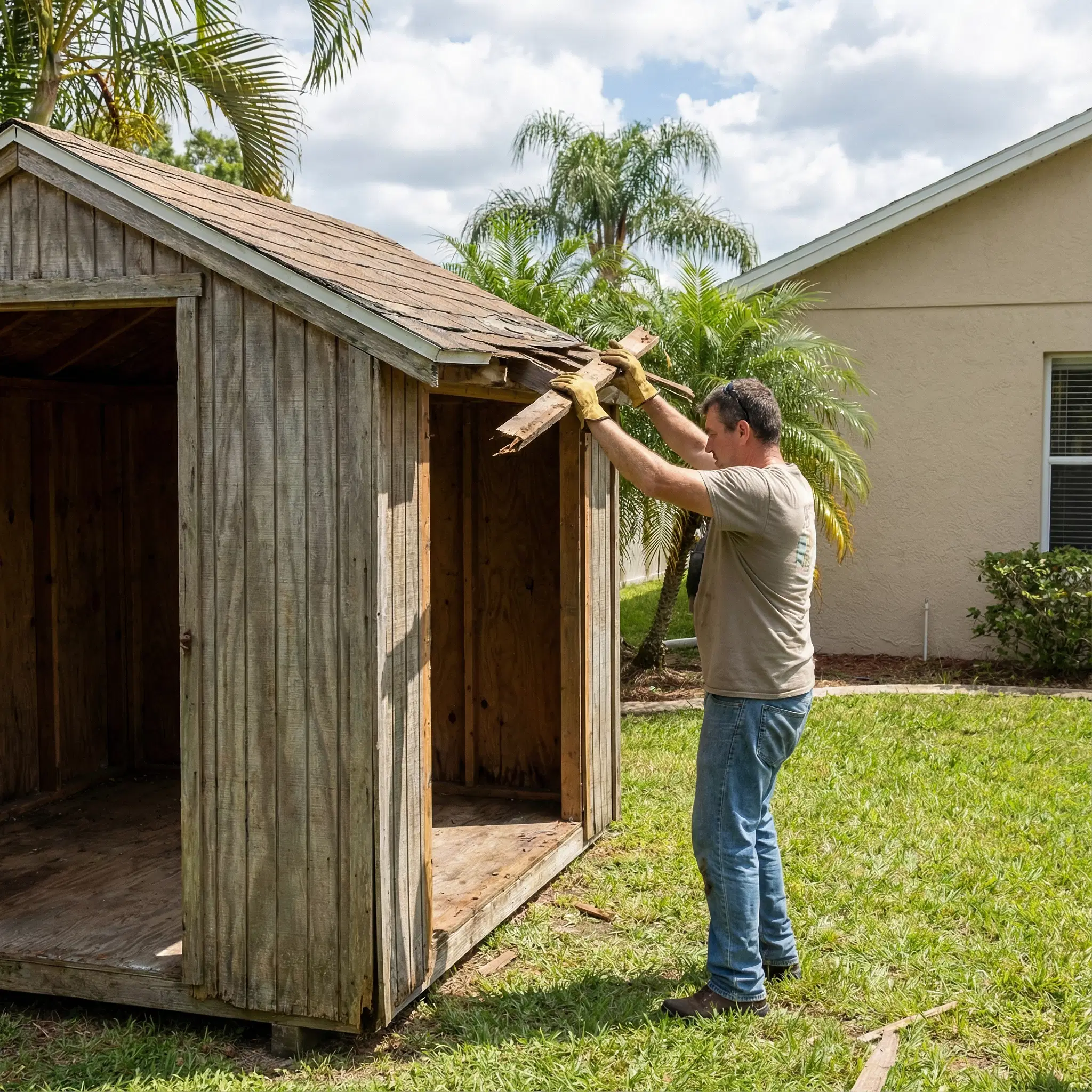
- Dismantle the Roof: Start by removing the shingles or metal roofing, then carefully pry off the sheathing underneath. Deconstruct the roof trusses or rafters one by one.
- Take Down the Walls: With the roof gone, the walls can be safely removed. Pry them away from the floor frame and lay them down carefully.
- Break Down the Floor: The final step is to pry up the floorboards and dismantle the underlying frame.
For a Deck:
- Clear the Surface: Remove all furniture, grills, and planters.
- Remove Railings and Stairs: These are often the easiest parts to start with and will clear your workspace.
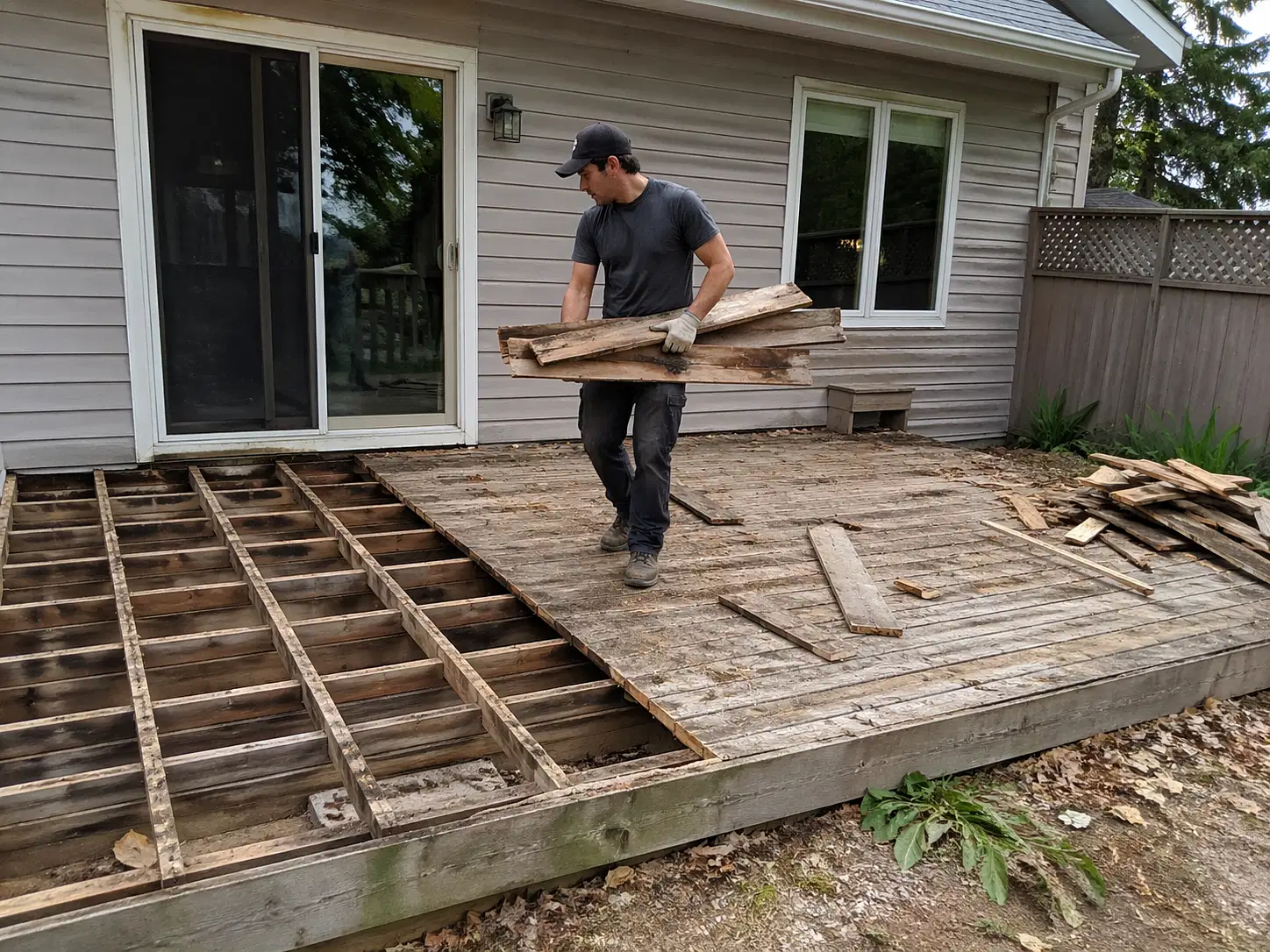
- Pry Up the Deck Boards: Start at one end and work your way across, pulling up each board. Be sure to remove or hammer down any protruding nails or screws as you go.
- Detach the Frame: This is the most critical part. Carefully remove the joists and then, if applicable, unbolt the ledger board from the house. This may require support to prevent the remaining structure from falling.
- Remove Posts and Footings: Dig around the support posts to remove them from the ground or their concrete footings.
Step 4: Handling the Debris—The Final Hurdle
Once the structure is down, you're left with a large pile of wood, nails, shingles, and other materials. This is often the most underestimated part of the job. You can't just leave it on the curb, and much of it won't fit in your regular Blue Box or Green Bin. Proper disposal is crucial.
You'll need to sort the materials for recycling and disposal. Pressure-treated wood, for example, often requires special handling and cannot be burned or composted. You'll also need a truck or trailer large enough to haul everything to the appropriate waste management facility, which involves time, effort, and disposal fees.
This is where a professional junk removal service provides immense value. A team can not only handle the demolition but also efficiently load and haul away all the construction debris, ensuring that materials are recycled or disposed of responsibly and in accordance with local regulations. It turns a multi-day, labor-intensive project into a hassle-free experience.
Reclaim Your Backyard the Smart and Safe Way
Removing an old shed or deck is a fantastic way to transform your outdoor living space. While a DIY approach can be rewarding, it requires careful planning, the right equipment, and a serious commitment to safety. From the initial assessment to the final cleanup, every step matters.
If you're ready to clear out the old to make way for the new but want to avoid the risks and hard labor, Blackout Demolition & Landscaping is here to help. We provide professional shed removal, deck removal, and fence removal services for homeowners throughout Gananoque and the surrounding communities. Contact us today for a free, no-obligation estimate and let our experienced team handle the heavy lifting for you!